BLOG
Job Scam Red Flags in 2026: How to Spot Fake Listings Before They Waste Your Time (or Worse)
Sep 6, 2026
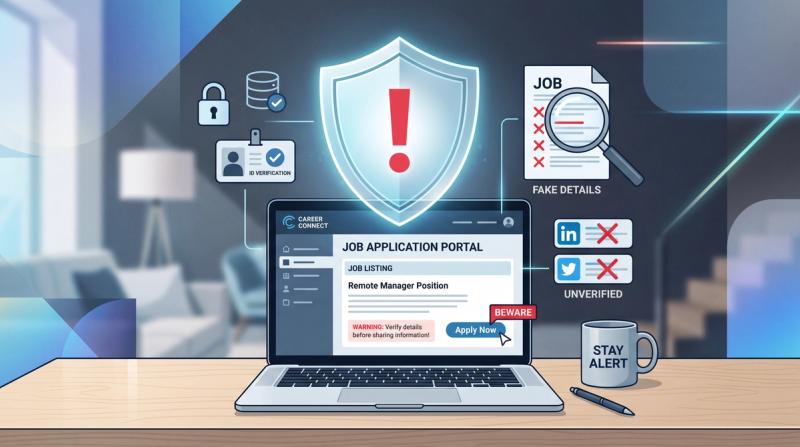
Fake job listings are getting harder to spot, and job seekers are paying the price. Here is how to recognize the warning signs before you send your resume, your personal information, or your money to someone running a scam.
Job Scam Red Flags in 2026: How to Spot a Fake Job Posting Before It Costs You
Quick answer: The clearest job scam red flags in 2026 are unsolicited job offers with no real interview, pay that is far above market rate, requests for personal information before an offer, interviews conducted only through text-based chat apps, any request for payment from you to the employer, and a company that cannot be verified outside the job posting itself. Seeing two or more of these together is a strong signal to stop and verify before applying.
If you have been job searching for any length of time recently, you have probably come across at least one posting that felt a little off. The pay may be suspiciously high for an entry-level role. The company name may be slightly different from what you expected. Someone may have reached out on LinkedIn offering you a job you never applied for. These are not coincidences. Job scam red flags in 2026 are everywhere and more sophisticated than before. Scammers are using AI-generated job descriptions, fake company websites, and professional-looking email threads to fool job seekers who are already stressed, already desperate, and already spending hours a day applying to positions that may or may not be real.
This article is not meant to scare you away from applying to jobs online. It is meant to give you the tools to distinguish a real opportunity from one designed to steal your time, your personal information, or your money. Because the cost of falling for a job scam is not just embarrassment, it can mean identity theft, lost wages, and weeks of wasted effort during a period of your life when you can least afford it.
Why Job Scams Are Getting Harder to Spot
A few years ago, job scams were easier to identify. The grammar was bad. The email address was obviously fake. The job description made no sense. That is no longer reliably true. Scammers now use AI tools to write polished, professional-sounding job descriptions that are nearly indistinguishable from real ones. They clone real company websites, sometimes down to the exact logo and color scheme. They create fake LinkedIn profiles with real-looking work histories and connections. They even conduct fake video interviews using pre-recorded clips or deepfake technology.
The people running these scams understand the job search process well enough to mimic it convincingly. They know that job seekers are used to quick turnarounds, that remote work has made in-person verification less common, and that someone unemployed for several months is more likely to overlook warning signs when an exciting offer appears. That is not a character flaw. That is a human response to pressure, and scammers exploit it deliberately.
The Most Common Job Scam Red Flags in 2026
Not every red flag means a posting is definitely a scam. But if you are seeing multiple warning signs at once, that is worth taking seriously. Here are the patterns that show up most consistently in fraudulent job listings and outreach.
You Were Contacted Without Applying
Legitimate recruiters do reach out to candidates proactively. That happens. But if someone contacts you out of nowhere with a job offer that requires almost no interview process, pays unusually well, and asks you to respond quickly, be cautious. Real recruiters who find you on LinkedIn or through a resume database will typically ask if you are open to hearing about an opportunity. They will not lead with a formal offer before they have even spoken with you.
The Pay Does Not Match the Role
If a posting is offering significantly more than the standard market rate for a role that requires minimal experience or qualifications, that is worth questioning. Scammers use inflated salaries to get attention and lower your guard. Before you get excited about a number, check what similar roles are actually paying on platforms like the Bureau of Labor Statistics Occupational Outlook Handbook or by searching comparable listings in your area.
They Ask for Personal Information Early
A real employer does not need your Social Security number, your bank account information, or a copy of your driver's license before you have completed an interview and received a formal offer. If any part of the application or onboarding process asks for sensitive personal data before you have a signed offer letter and have verified the company's legitimacy, stop. That information is the target. The job is the bait.
The Interview Process Feels Wrong
Scam interviews often occur entirely via text-based chat, sometimes through platforms like Google Hangouts or WhatsApp, rather than a company email system. If you are asked to interview via a messaging app, if the questions feel scripted, or if you are offered the job almost immediately after a short conversation, those are warning signs. Legitimate hiring processes involve multiple touchpoints, real people who can answer specific questions about the role, and some form of verifiable company presence.
You Are Asked to Pay for Something
This one is simple: a real employer does not ask you to pay for your own background check, your training materials, your equipment, or anything else as a condition of employment. Some scams will send you a fake check, ask you to buy gift cards or equipment, and send the remainder back, then disappear once you have spent real money. If money is flowing from you to them before you have started working, that is a scam.
The Company Is Hard to Verify
Search the company name independently. Do not click links in the job posting itself. Look for a real website with a real address, real employees on LinkedIn, and real reviews on platforms like Glassdoor or Indeed. If the company has no verifiable presence outside the job posting, or if the website looks like it was built last week, that is a red flag. Cross-reference the email domain the recruiter is using with the company's official website. A recruiter from a major company should not be emailing you from a Gmail account.
What Happens When You Apply to a Scam Posting
Even if you do not fall for the full scam, applying to a fake listing has real costs. You spend time writing a tailored cover letter and resume. You may share your email address and phone number, which then get added to lists used for phishing attempts. You might spend days waiting to hear back from a company that does not exist. And if you do engage further, the risks escalate quickly.
The job search is already hard enough without spending your energy on listings that were never real. Every hour you spend chasing a scam is an hour you are not spending on a real opportunity.
Identity theft is the most serious outcome. Scammers who collect enough personal information, your name, address, phone number, employment history, and especially any government ID numbers, can open credit accounts, file fraudulent tax returns, or sell your information to other bad actors. Recovering from identity theft takes time and money, neither of which most job seekers have in abundance.
How OneClick Smart Resume Helps Filter Out Fake Listings
OneClick Smart Resume was built by Jon Irwin, a PMP-certified Air Force veteran and Project Manager at the City of Detroit, after he spent six months navigating a difficult job search on his own. Part of what he encountered during that process was the growing problem of fraudulent job postings, listings that looked real but were designed to harvest information or money from job seekers who were already in a vulnerable position.
That experience shaped how the platform was built. OneClick Smart Resume has blocked over 4,300 scam job postings from appearing on users' screens. The platform actively screens listings so that when you are searching for opportunities and tailoring your resume to a job description, you are working with real postings from real employers. That is not a small thing when you are spending hours every week on applications.
The platform also helps you tailor your resume to specific job descriptions so that your application clearly communicates your experience and gets past automated screening systems. It is not a staffing agency, and it does not submit applications on your behalf. What it does is help you show up as a stronger candidate for the jobs you are actually pursuing, while filtering out the noise and the fraud that makes the job search harder than it needs to be.
If you are a veteran, you get free access to the full platform. Jon built OneClick Smart Resume with veterans in mind, having firsthand experience with how difficult it can be to translate military experience into civilian resume language and navigate a job market that is not always straightforward.
A Quick Check Before You Apply
Before you send your resume to any posting you are unsure about, run through a few quick checks. Look up the company independently using a search engine, not the links in the posting. Find at least one real employee at the company on LinkedIn and confirm that their email domain matches the recruiter's. Search the job title and company name together with the words "scam" or "review" to see if anyone else has flagged it. Check whether the company has a physical address and a phone number that connects to a real person.
None of these steps takes more than ten minutes, and they can save you from a situation that takes months to untangle. The job search is stressful enough without adding fraud recovery to your list of problems.
What to Do If You Think You Already Responded to a Scam
If you have already sent personal information to a posting you now suspect was fraudulent, act quickly. Report the posting to the job board where you found it. If you shared financial information, contact your bank immediately. If you shared your Social Security number, consider placing a fraud alert or credit freeze with the major credit bureaus. Report the scam to the Federal Trade Commission at reportfraud.ftc.gov. You are not alone in this, and there are real resources available to help.
Start Your Search on Solid Ground
The best defense against job scams is a combination of awareness and a search process that filters out bad listings before they reach you—knowing what to look for helps. Having a platform that does some of that filtering on your behalf helps more.
If you want to see how your resume is performing before you start applying, the free Resume Health Check at check.oneclicksmartresume.com gives you a fast, honest read on where your resume stands and what might be holding it back. And if you are ready to take a more structured approach to your job search, you can create a free account at oneclicksmartresume.com and start working with real job listings in a platform built to protect your time and your information.
Frequently Asked Questions
What are the biggest job scam red flags in 2026? The biggest red flags are being contacted with a job offer you never applied for, pay that is well above market rate for the role, requests for personal or financial information before a formal offer, interviews conducted only through text-based chat apps, and any request that you pay for equipment, training, or a background check yourself.
How can I tell if a job posting is fake? Search the company name independently rather than clicking links in the posting; confirm the recruiter's email domain matches the company's real website; look for real employees and reviews on LinkedIn and Glassdoor; and check for a verifiable physical address and phone number. If the company has no presence outside the job posting, treat it as a warning sign.
Why are job scams harder to spot in 2026 than they used to be? Scammers now use AI tools to write polished job descriptions, clone real company websites, build convincing fake LinkedIn profiles, and, in some cases, run fake video interviews using pre-recorded clips or deepfake technology. The obvious signs, like bad grammar or clearly fake email addresses, are far less common than they were a few years ago.
Should I ever pay money to apply for a job or start a new role? No. A legitimate employer does not require you to pay for your own background check, training materials, or equipment as a condition of employment. If money needs to move from you to the employer before you are working and being paid, treat it as a scam.
What should I do if I have already provided personal information in response to a scam job posting? Report the posting to the job board where you found it, contact your bank right away if you shared financial details, consider a fraud alert or credit freeze with the major credit bureaus if you shared your Social Security number, and file a report with the Federal Trade Commission at reportfraud.ftc.gov.
How does OneClick Smart Resume help protect job seekers from scams? OneClick Smart Resume actively screens job listings and has blocked over 4,300 scam postings from reaching users, so job seekers can spend their time applying to real openings from real employers rather than chasing fraudulent listings. Veterans get free access to the full platform.
AI Transparency: Claude was used to research this article and augment my own experience. Grammarly used to correct spelling, grammar, and sentence structure.