BLOG
How to Tell If a Job Posting Is a Scam (Before You Apply)
Jun 19, 2026
Learn the red flags of fake job postings and recruiter scams, plus how to verify a listing is real before you apply or hand over personal information.
You finally find a posting that looks perfect. Great title, solid pay range, remote-friendly. You apply within minutes. Then a recruiter messages you the same day, the interview is a single text exchange, and suddenly they're asking you to buy a laptop "for reimbursement" or send your driver's license "for HR records."
That's not bad luck. That's a pattern, and it's happening to job seekers every day across nearly every major job board.
Scam job postings have grown alongside the rise of remote work, and the tactics have gotten harder to spot. Fake listings are designed to look exactly like real ones, sometimes even copying language from legitimate companies. Knowing the warning signs is the single best protection you have before you apply.
Why This Is Getting Worse, Not Better
Job boards exist to maximize the number of listings on their platform, not to verify every single one. Aggregators pull postings from hundreds of sources automatically, and many of those sources have little to no screening of their own. A scam listing can be copied, reposted, and pushed out to thousands of job seekers before anyone flags it.
That volume is exactly what scammers count on.
The Red Flags to Watch For
The contact comes from a free email address. A recruiter messaging from a Gmail or Outlook account instead of a company domain is one of the most common signs of a fake listing. Legitimate companies recruit from company email.
The interview happens entirely over text or chat apps. If your "interview" is a string of messages on Telegram or WhatsApp with no video call and no real conversation, that's a major warning sign. Real hiring processes involve a live conversation at some point.
You're asked to pay for anything. Equipment, background checks, training materials, "onboarding fees." Legitimate employers do not ask candidates to pay money before they're hired. This is true without exception.
The company name doesn't check out. Search the company. If you can't find a real website, real employees on LinkedIn, or any footprint beyond the job posting itself, that's a problem.
The pay feels disconnected from the role. Unusually high pay for minimal experience or vague responsibilities is a classic lure. So is a role with almost no detail about what you'd actually be doing day to day.
You're rushed. Scammers want a fast yes before you have time to think it through. Real hiring processes rarely move at warp speed, especially for remote roles that attract a high volume of applicants.
The listing asks for sensitive information too early. Your Social Security number, a copy of your ID, or banking details should never be requested before an offer, and even then only through a verified, secure process.
What to Do If Something Feels Off
Trust that instinct. If a posting or recruiter interaction feels strange, slow down and verify independently. Look the company up on LinkedIn. Search the exact job title and company name plus the word "scam." Check whether the same listing is posted on the company's actual careers page.
If you can't verify it within a few minutes, it's not worth the risk.
The Bigger Picture
None of this should fall entirely on job seekers to catch. The tools we use to search for work should be doing more of this work for us. That's the part of the system that's broken: aggregators optimize for volume, not safety, and the burden of catching scams gets passed down to the person who can least afford to be fooled.
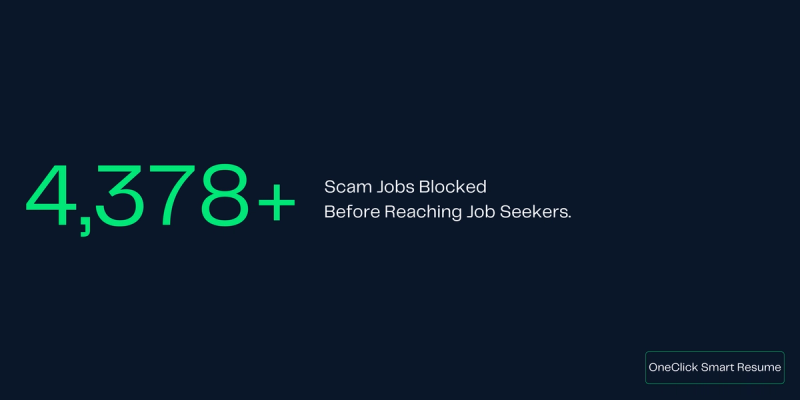
At OneClick Smart Resume, this is exactly the gap we built our screening system to close. Every job listing on the platform passes through layered checks before it ever reaches a job seeker, so the red flags above get caught automatically instead of relying on you to catch them in the moment.
You can read more about how that screening process works in the rest of this series. For now, the most important thing is this: scam listings are common, they're well disguised, and a few minutes of verification can save you from a costly mistake.